Espresso Water Recipe Mixer
Great espresso water is a recipe, not a mystery. Pick a mineral profile below and get the exact baking soda and epsom salt amounts to mix into distilled water — tuned for taste, and gentle on your machine.
Pick a mineral profile
Your recipe
Mix into distilled or RO water
Per liter:
4-liter batch:
Estimated TDS: ppm (approximate)
Mix it:
- Measure out distilled or RO water — 1 liter, or 4 liters for the batch amounts above.
- Weigh the minerals on a scale accurate to 0.1 g.
- Add the baking soda and shake until fully dissolved.
- Add the epsom salt and shake again.
- Label the jug with the recipe name and today's date — it keeps about 2 weeks.
A few safety notes
- Food-grade minerals only. Plain baking soda (sodium bicarbonate, no additives) and USP / food-grade epsom salt from the pharmacy.
- Never use tap water as the base. Chlorine, unknown hardness, and seasonal swings make it unpredictable — start from distilled or RO.
- Machine-safe by design. These are low-mineral, low-chloride recipes, and chloride is what pits boilers — so your machine stays happy.
- Don't brew with pure distilled or RO water alone. It tastes flat, and some machines' water-level sensors misread it.
Why water changes your espresso
A huge share of the sour, bitter, or flat shots beginners blame on their grinder are really water chemistry. Minerals buffer acids and carry flavor into the cup — too few and shots taste sharp and hollow; too many and they turn harsh while coating your boiler in scale.
These recipes start from distilled or RO water (a blank slate) and add back just enough minerals to hit the sweet spot: tasty shots and gentle treatment of your machine. For the full story, read our water for espresso guide.
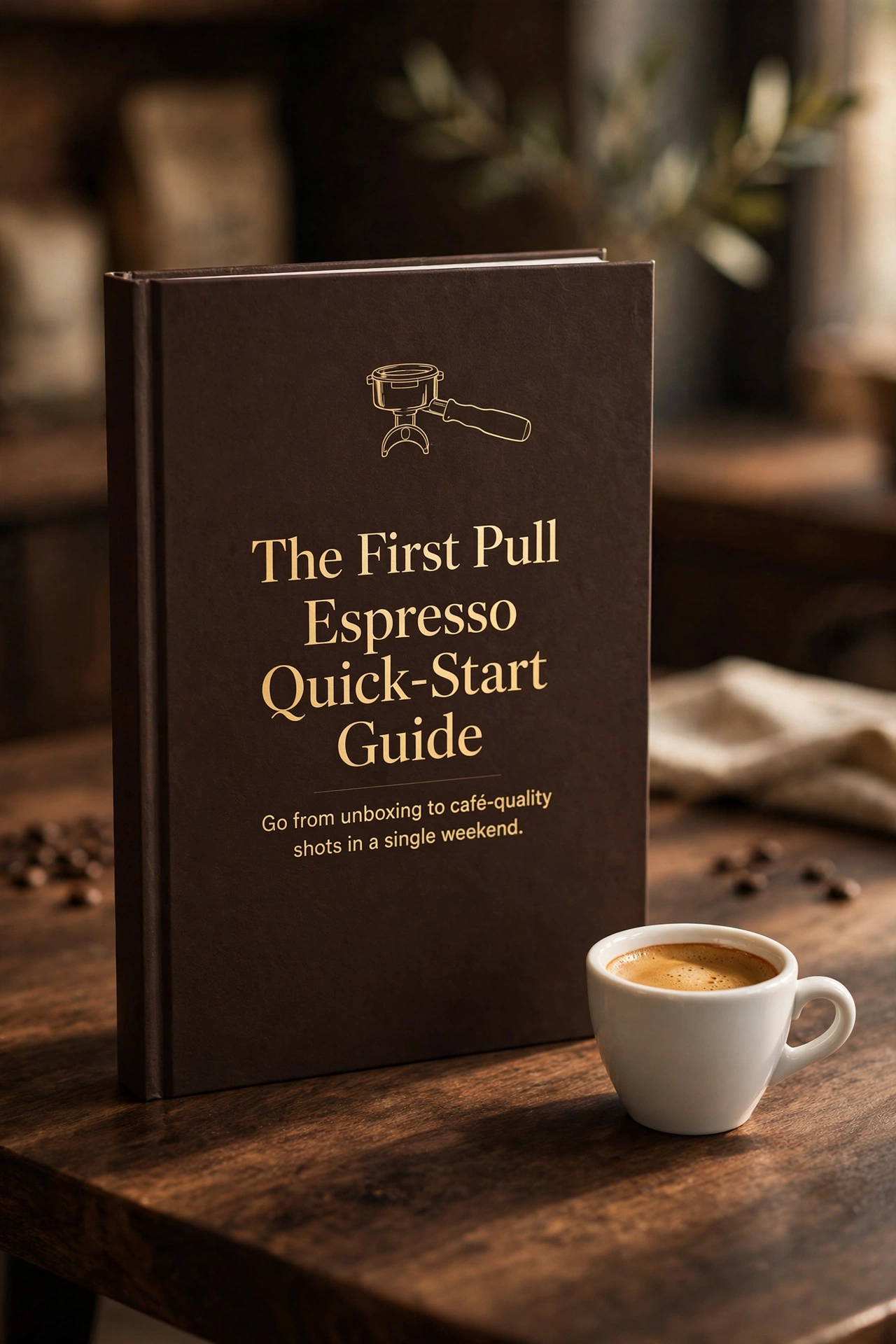
The shortcut
Learn espresso in a weekend.
The 15-page Quick-Start Guide: your first shot step by step, the dial-in fix-it flowchart, milk basics, and a fridge-ready cheat sheet. Instant PDF download.
Get the guide — $6 $6 · yours foreverWater FAQ
Can I just use tap water?
No — not as the base. Tap water's mineral content, chlorine, and hardness swing by zip code and season, so you can't control what ends up in the cup or on your boiler. These recipes start from distilled or RO water so every ppm is deliberate.
Where do I buy food-grade minerals?
Plain baking soda from any grocery store (check the label: sodium bicarbonate, no additives) and food-grade or USP epsom salt from a pharmacy. A 0.1 g kitchen scale — about ten dollars — weighs the amounts accurately.
Will this recipe scale my machine?
These are low-mineral, machine-friendly levels — well under typical tap water — and the recipe is chloride-free, which matters because chloride is what pits boilers. Still descale on schedule; see our descaling and maintenance schedule.