Milk Drink Builder
Pick a drink and a shot count, and get a visual recipe card: espresso dose and yield, milk volume, target temperature, foam texture, and serving size — the ratios cafés actually use.
Milk drinks are just ratios
Once you stop memorizing names and start thinking in ratios, the whole café menu collapses into one idea: how much milk goes with how much espresso, and how foamy is it? A cortado is a 1:1 espresso-to-milk drink with almost no foam. A cappuccino is a 1:2 drink with thick, dry foam. A latte is a 1:3 drink with silky milk. Same espresso, completely different drinks.
The temperature ceiling
Milk has a ceiling you should respect: around 165°F (74°C). Below it, the milk's natural sugars taste sweet and silky. Above it, the proteins scorch and the milk tastes flat and slightly burnt — which is why overheated lattes taste like nothing. While you're learning, a cheap kitchen thermometer in the pitcher takes the guessing out. You'll stop needing it within a couple of weeks.
How to use this tool
Choose a drink from the dropdown and tap a shot count. The recipe card shows the espresso dose and yield (kept at the standard 1:2 ratio), how much milk to steam, the target temperature, what the foam should feel like, and the final serving size. Milk volume scales with your shot count so the ratio stays right. Pull your shots, steam to temp, pour — done.
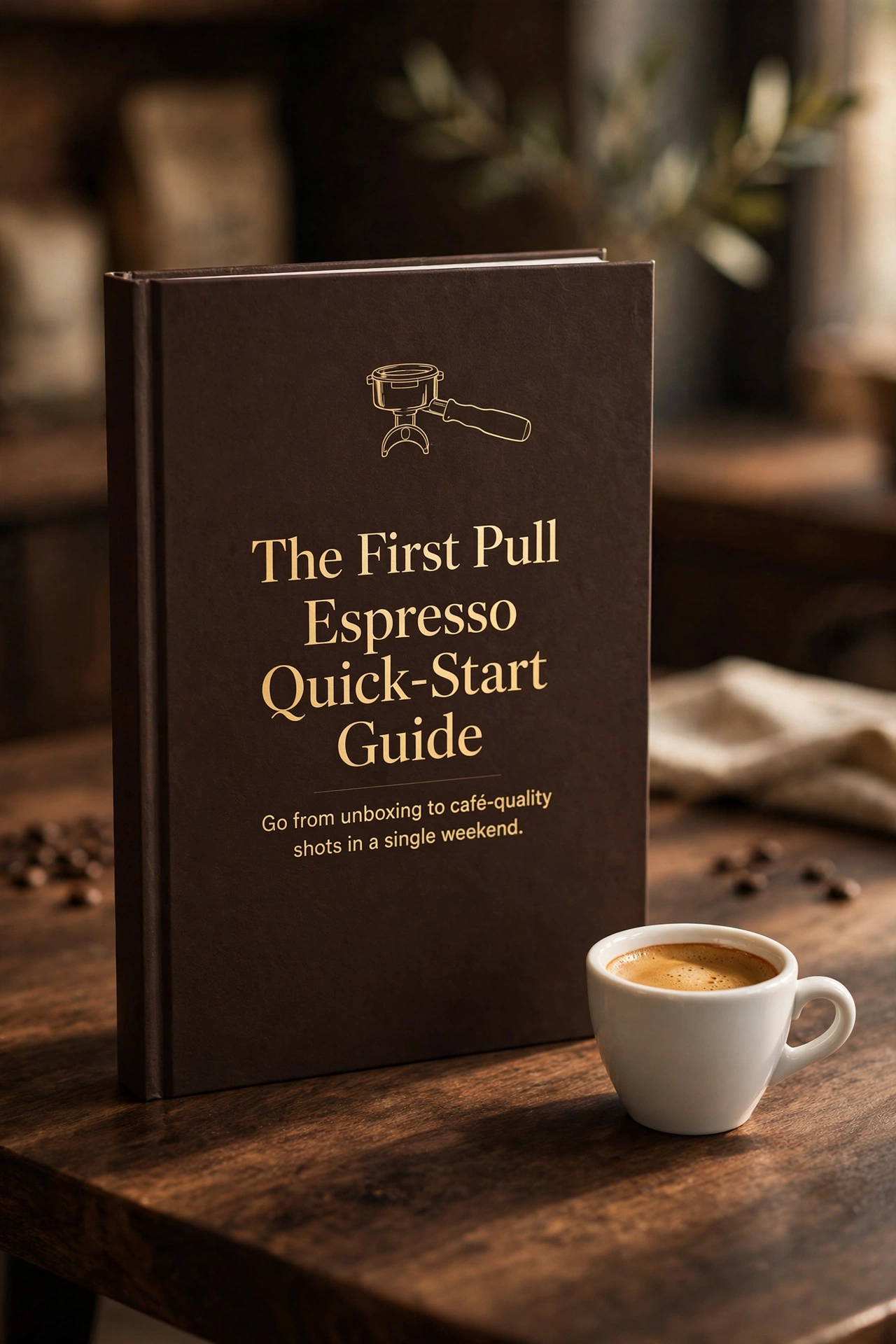
The shortcut
Learn espresso in a weekend.
The 15-page Quick-Start Guide: your first shot step by step, the dial-in fix-it flowchart, milk basics, and a fridge-ready cheat sheet. Instant PDF download.
Get the guide — $6 $6 · yours foreverMilk drink FAQ
What's the real difference between a latte and a cappuccino?
It's the milk texture, not just the size. A cappuccino is about one-third steamed milk and one-third thick, dry foam sitting on top. A latte is mostly silky steamed milk with just a thin layer of microfoam. Same shots, very different mouthfeel.
What temperature should steamed milk be?
Aim for 150–165°F (66–74°C). That range keeps the milk sweet and silky. Above about 170°F the milk scalds — it tastes flat and slightly burnt — and below 140°F it tastes lukewarm and thin. A cheap kitchen thermometer works fine while you're learning.
Does more milk mean less caffeine?
No. Caffeine comes from the coffee dose, not the milk. A 12 oz latte with two shots has the same caffeine as a 2 oz double espresso — it just tastes milder because the milk dilutes it. If you want less caffeine, order fewer shots, not more milk.
Can I build these with non-dairy milk?
Yes, though some steam better than others. Barista-edition oat milk is the easiest — it stretches and pours almost like dairy. Almond and coconut split more easily, so steam them a little cooler (around 140°F) and skip the foam art ambitions.