Milk Steaming Timer
Prop your phone next to the machine. This timer walks you through the two phases of steaming — stretch (add air to ~40°C), then whirlpool texture to 55–65°C — with a clear stop signal so you never scald the milk.
ReadyPress Start when you open the steam valve
0:00
Temp guide: stretch to ~40°C · stop at 55–65°C
Quick technique
Stretch (phase 1): keep the steam tip just under the milk surface. You should hear a ripping/tearing sound — that's air going in. Aim for this until the milk reaches about 40°C (lukewarm on your hand).
Texture (phase 2): sink the tip deeper and angle the pitcher to spin a whirlpool. The ripping stops; the foam folds into the milk, turning glossy. Stop at 55–65°C — too hot to hold is your cue.
Why two phases matter
Beginners either add no air (flat, thin milk) or add it the whole time (dry cappuccino foam you could spoon). The trick is doing one job at a time: add air first, while the milk is cool and can take it in, then spend the rest of the heat folding that foam into glossy microfoam. Milk that hits 70°C scalds — proteins break, sweetness dies, and your art won't pour. That's why the timer gives you a firm stop point.
How to use this timer
Purge the steam wand, put the tip in your milk, and press Start as you open the valve. Phase 1 (gold bar) is your stretching window — add air with the ripping sound until ~40°C, roughly the first 15–20 seconds. When the bar turns green, you're in phase 2: sink the tip, build your whirlpool, and stop at 55–65°C. Hit Stop to freeze your time so you can compare sessions. Our milk steaming guide goes deeper on pitcher angle and milk choice.
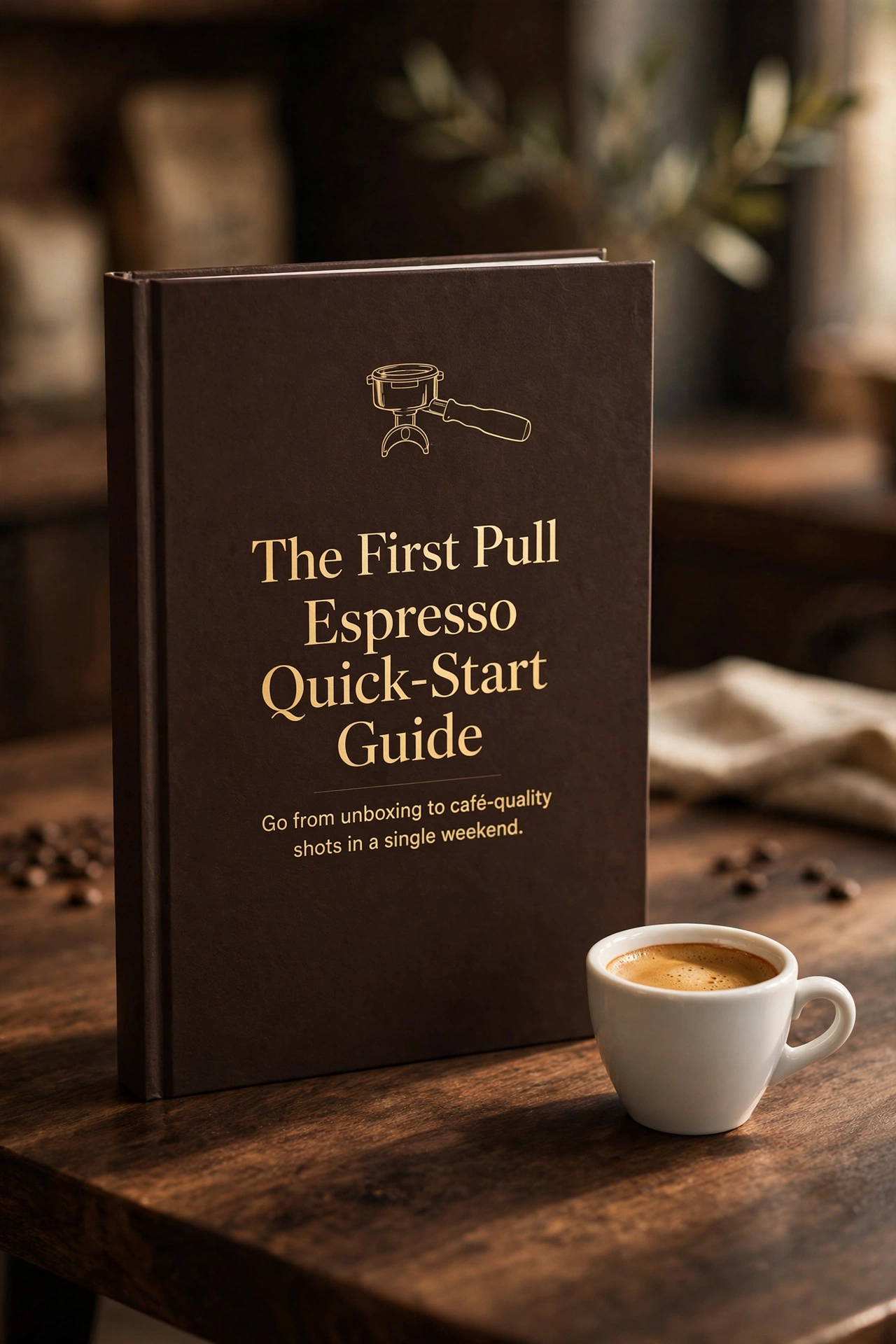
The shortcut
Learn espresso in a weekend.
The 15-page Quick-Start Guide: your first shot step by step, the dial-in fix-it flowchart, milk basics, and a fridge-ready cheat sheet. Instant PDF download.
Get the guide — $6 $6 · yours foreverMilk steaming FAQ
What temperature should steamed milk be for latte art?
Stop steaming at 55–65°C (130–150°F). That range gives glossy, pourable microfoam and sweet milk. Past 70°C the milk scalds — it tastes flat and the foam breaks apart, so your art won't pour.
What is the difference between the stretch and texture phases?
The stretch phase adds air: keep the steam tip near the surface so it makes a ripping or tearing sound until the milk reaches about 40°C. The texture phase incorporates that air: sink the tip deeper and angle the pitcher to create a whirlpool, which folds the foam into glossy microfoam up to 55–65°C.
How do I know when the milk is hot enough without a thermometer?
Use your hand on the pitcher: when it becomes too hot to hold comfortably, you're around 60°C. Stop there. This timer's phases also give you timing landmarks, but a thermometer is the most reliable way — they're cheap and worth owning.